What Is Cajun Mardi Gras? Food, History, and Traditions
Cajun Mardi Gras is a traditional rural Louisiana celebration rooted in food, community, and centuries-old customs. Unlike the large parades and crowds of New Orleans Mardi Gras, Cajun Mardi Gras is participatory, local, and deeply tied to shared meals and cultural tradition.
Instead of floats and beads, Cajun Mardi Gras features masked riders, live Cajun music, handmade costumes, and communal cooking. The celebration takes place in small towns and rural communities across Acadiana, where neighbors gather to cook, eat, and keep traditions alive.
For travelers visiting Louisiana during Mardi Gras season, Cajun Country offers one of the most authentic ways to experience Mardi Gras through food and community rather than spectacle.
What Is Cajun Mardi Gras?
Cajun Mardi Gras is a community-based Mardi Gras celebration found in rural south Louisiana, especially in the Acadiana region surrounding Lafayette. Its traditions trace back to medieval France, where masked gatherings, music, and shared meals marked the final day before Lent.
French settlers brought these customs to Louisiana in the 18th century. Over time, Cajun communities adapted them to rural life, Catholic traditions, and the agricultural calendar. The result is a Mardi Gras celebration centered on participation, contribution, and food.
Unlike New Orleans Mardi Gras, Cajun Mardi Gras isn’t something you simply watch. Locals dress in handmade costumes, visit neighbors, cook together, and take part in traditions passed down for generations.
The History Behind Cajun Mardi Gras
The roots of Cajun Mardi Gras go back hundreds of years. In rural France, masquerading allowed people to temporarily blur social roles before the strict fasting period of Lent.
These traditions survived in Louisiana because Cajun communities were often isolated and self-sufficient. Mardi Gras became a time to gather, share resources, and enjoy rich food before Lent began.
Food played a central role. Families used what they had on hand, pooling ingredients to create communal meals. That emphasis on shared cooking and collective effort still defines Cajun Mardi Gras today.
Courir de Mardi Gras: The Heart of Cajun Mardi Gras
The most recognizable Cajun Mardi Gras tradition is the Courir de Mardi Gras, or “Mardi Gras run.”
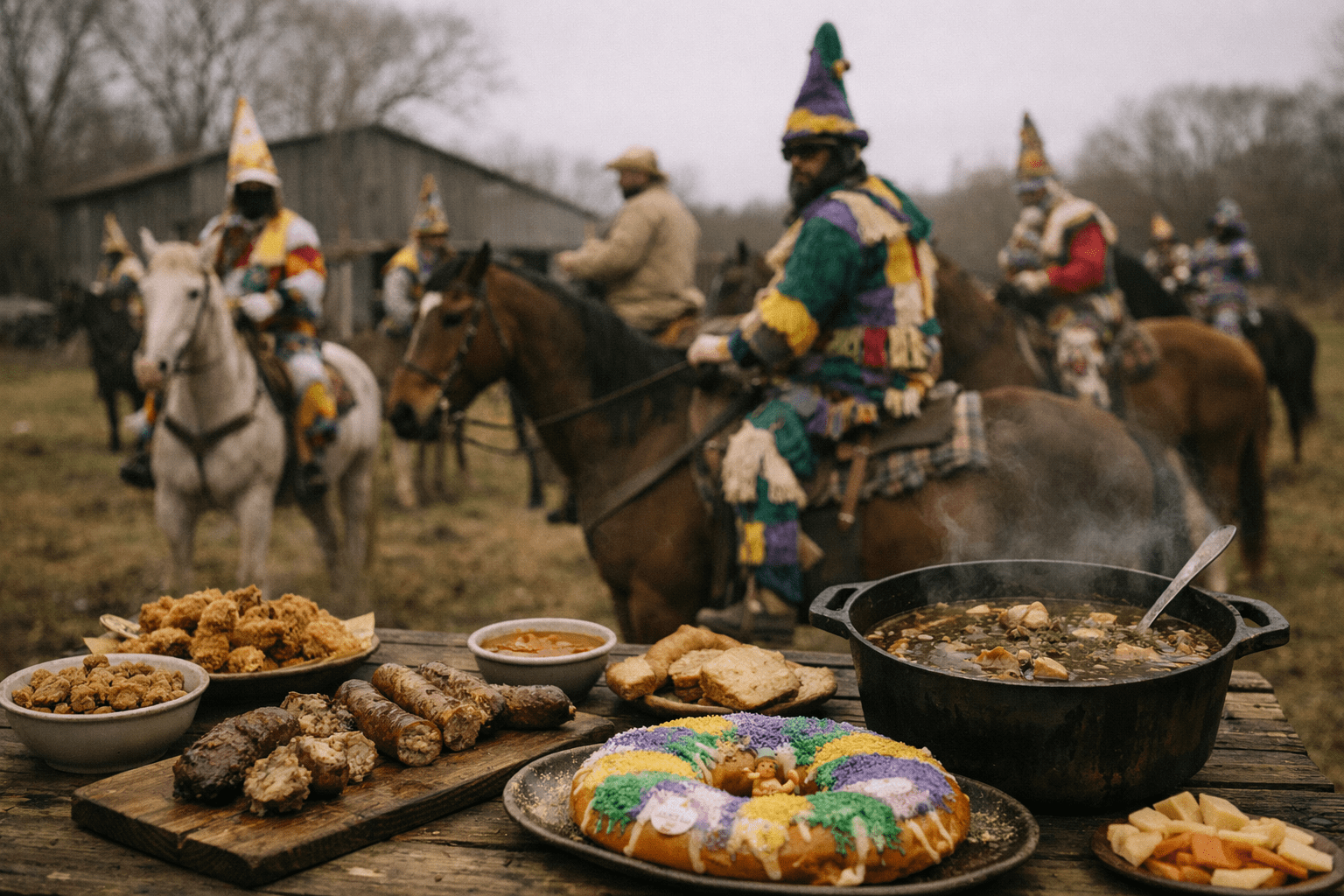
During the courir, masked participants ride horseback or wagons through the countryside, stopping at homes to ask for ingredients for a communal gumbo. Along the way, they sing traditional Cajun songs, dance, and take part in playful rituals.
Common elements of the Courir de Mardi Gras include:
- Brightly colored handmade costumes with pointed caps
- Wire mesh masks
- Live Cajun music
- Collecting chickens and other gumbo ingredients
At the end of the run, the community gathers to cook and share a large pot of gumbo. Cajun Mardi Gras isn’t about excess. It’s about contribution and connection.
Traditional Cajun Mardi Gras Food
Food is the foundation of Cajun Mardi Gras. Nearly every tradition connects back to cooking and sharing a meal.
Gumbo
Gumbo is the centerpiece of Cajun Mardi Gras. Ingredients collected during the courir are cooked together, often outdoors, in large cast-iron pots.
Cajun gumbo typically features a dark roux and includes chicken, sausage, or locally available meats. It’s practical, filling, and designed to feed a crowd.
Boudin and Smoked Sausage
Boudin is a staple during Mardi Gras season in Cajun Country. Made from pork, rice, and seasoning, it’s commonly served alongside smoked sausage at gatherings and community meals.
Rice-Based Dishes
Rice is central to Cajun cooking. Dishes like jambalaya, dirty rice, and rice dressing often appear during Mardi Gras celebrations, especially in homes and community halls.
Cajun King Cake
Cajun king cakes are simpler than New Orleans versions. Traditionally, they were enjoyed throughout the Mardi Gras season rather than being the centerpiece of Mardi Gras Day itself.
Cajun Mardi Gras vs New Orleans Mardi Gras
Many visitors don’t realize how different these celebrations are.
Cajun Mardi Gras is rural, food-centered, and participatory
New Orleans Mardi Gras is urban, parade-focused, and spectator-based
In Cajun Country, Mardi Gras feels less commercial and more connected to everyday life. You don’t just see the traditions. You eat them, hear them, and take part in them.
Where Cajun Mardi Gras Is Celebrated
Cajun Mardi Gras is celebrated across Acadiana, particularly in rural towns and countryside areas. Lafayette serves as an ideal home base for visitors because it sits near many traditional celebrations.
Notable Cajun Mardi Gras communities include:
- Eunice and surrounding rural areas
- Mamou
- Church Point
- Iota
- Small communities throughout St. Landry, Acadia, and Vermilion Parishes
Each area has its own variation, but all emphasize food, music, and community participation. Because many events aren’t heavily promoted, visitors often miss them without local insight.
Cajun Mardi Gras Festivals and Events Near Lafayette
In addition to rural runs, Cajun Mardi Gras season around Lafayette includes festivals and public events highlighting Cajun food, music, and culture. These events make Lafayette a convenient base for visitors who want access to both tradition and comfort.
Lafayette Mardi Gras (Downtown Lafayette)
Lafayette hosts family-friendly Mardi Gras parades and events that reflect Cajun culture without the scale of New Orleans. Visitors can enjoy local food vendors, live Cajun music, and neighborhood parades.
Courir de Mardi Gras Near Lafayette
Towns like Church Point, Eunice, Mamou, and Iota host some of the best-known Cajun Mardi Gras runs. Many visitors stay in Lafayette and travel to these towns during the day.
Experiencing Cajun Mardi Gras as a Visitor
Cajun Mardi Gras welcomes visitors, but it’s important to remember these are living traditions, not performances.
One of the easiest ways to connect with Cajun Mardi Gras is through food-focused cultural experiences. Guided Cajun food tours during Mardi Gras season help visitors understand what they’re eating, why it matters, and how it connects to the celebration.
Instead of guessing where to go or what’s authentic, visitors can focus on learning, eating, and enjoying the season.
Frequently Asked Questions About Cajun Mardi Gras
What is Cajun Mardi Gras?
Cajun Mardi Gras is a rural Louisiana celebration centered on food, community, and participation, featuring traditions like the Courir de Mardi Gras and communal gumbo cooking.
When is Cajun Mardi Gras in 2026?
Cajun Mardi Gras Day is Tuesday, February 17, 2026, with celebrations and food traditions happening throughout the season.
Where can visitors experience Cajun Mardi Gras?
Visitors can experience Cajun Mardi Gras in rural Acadiana, including Eunice, Mamou, Church Point, Iota, and surrounding communities.
Is Mardi Gras season a good time for a Cajun food tour?
Yes. Many traditional Cajun dishes are prepared only during Mardi Gras season.
How far in advance should I book a Cajun food tour for Mardi Gras 2026?
Booking several weeks in advance is recommended, as tours often sell out.
Why a Cajun Food Tour Makes Sense During Mardi Gras
During Mardi Gras season, Cajun food isn’t just something you order. It’s something people prepare together, often only once a year.
A Cajun food tour offers access to:
- Seasonal dishes tied directly to Mardi Gras traditions
- Local restaurants and food stops favored by residents
- Cultural context that explains why certain foods are eaten now
If you’re visiting Cajun Country for Mardi Gras 2026, a food tour is one of the simplest ways to experience these traditions without missing what makes them meaningful.
Final Thoughts
Cajun Mardi Gras offers a deeper, more personal way to experience one of Louisiana’s most famous celebrations. Rooted in history, shaped by food, and sustained by community, it remains one of the most authentic Mardi Gras traditions in the state.
For travelers planning a Mardi Gras 2026 trip, exploring Cajun Country through its food is one of the best ways to understand what Cajun Mardi Gras truly is and why it still matters today.