Cajun vs. Creole Food: A Guide to Ingredients, History and Flavor Profiles
Cajun and Creole cooking shape the soul of Louisiana, but people often mix them up. Both traditions share ingredients, techniques, and deep roots in community cooking. They also overlap in many dishes. Still, they developed in different places, drew from different cultural influences, and grew into their own styles over time.
If you want a general sense of what sets Cajun and Creole cooking apart, the guide below offers a grounded overview.
What Is Cajun Cuisine?
Cajun cuisine began with the Acadians, French-speaking settlers forced from Canada in the 1700s. When they arrived in south Louisiana, they lived in rural areas and relied heavily on the land. Their cooking reflects that resourcefulness: practical, hearty dishes built from what was available.
Cajun food also carries influences from Native American and African cooking, which shaped ingredients, spices, preservation methods, and approaches to stews and one-pot meals. Native American techniques such as smoking meats and using local herbs made a lasting mark. African cooks contributed methods for building deep flavors and using spices in balanced ways.
Cajun dishes tend to be rustic, slowly developed, and built from local ingredients like pork, rice, crawfish, game, and vegetables from the region. The flavors grow through long simmering rather than bright bursts of acidity.
What Is Creole Cuisine?
Creole cuisine grew up in a very different setting. It developed in and around New Orleans, a port city shaped by constant cultural exchange. French, Spanish, African, Caribbean, Native American, German, Italian, and later Latin influences blended into a cooking tradition that’s both local and cosmopolitan.
Because of this urban environment, Creole cooks often had access to a wider range of ingredients, including imported spices, tomatoes, butter, and wine. The result is food that’s layered and aromatic, with flavors that can feel lighter or more refined than Cajun dishes. This doesn’t make one better than the other – just different in origin and approach.
Cajun and Creole at a Glance
These points reflect tendencies, not fixed rules:
Origins
Cajun: Rural settlers in southern Louisiana, shaped by Acadian, Native American, and African influences.
Creole: Urban New Orleans, shaped by global trade and a diverse city population.
Ingredients
Cajun: Local and seasonal foods like pork, rice, crawfish, wild game, and smoked meats.
Creole: Tomatoes, butter, seafood, imported spices, and ingredients tied to European techniques.
Spice Level
Cajun: Often bold and peppery.
Creole: More herb-driven and aromatic.
Techniques
Cajun: One-pot meals, dark roux, slow simmering.
Creole: Lighter roux, sauces, baking, broiling, and techniques with European roots.
Appearance
Cajun: Darker and earthier.
Creole: Brighter, often with tomatoes.
The Holy Trinity
Both cuisines use the “Holy Trinity”: onions, bell peppers, and celery. It’s the base of many Louisiana dishes.
Where they differ is in what gets added next:
Cajun cooking often deepens the trinity with a dark roux made from flour and oil.
Creole cooking may use a lighter roux or lean more on tomatoes, herbs, and butter.
Key Ingredients in Cajun Food
Cajun cooking keeps ingredients simple and local:
A Dark Roux
Cooked until deep brown for a rich, smoky foundation.
Local Meats
Pork sausage, chicken, wild duck, alligator, and crawfish.
Rice
A core ingredient that stretches meals and soaks up flavor.
Smoked Sausage
Andouille adds heat and smokiness.
Bold Spices
Cayenne, paprika, garlic powder, onion powder, oregano, and black pepper.
Key Ingredients in Creole Food
Creole cooking draws from a wider pantry:
Tomatoes
A defining difference in dishes like Creole gumbo and shrimp Creole.
Butter
Used more than in Cajun cooking.
Seafood
Common due to New Orleans’ location.
Fresh Herbs
Thyme, parsley, basil, bay leaves, and green onions.
Imported Seasonings
White pepper, paprika, and spices often tied to European kitchens.
Flavor Profiles
Cajun
Warming, smoky, peppery, and grounded in long cooking times. You may notice:
- Smoky notes
- Peppery heat
- Earthiness
- Depth from slow simmering
Creole
Layered without being heavy. Often bright and aromatic. You may notice:
- Balanced seasoning
- Herb-forward flavors
- Tomato-driven acidity
- Gentle complexity
Well-Known Cajun Dishes
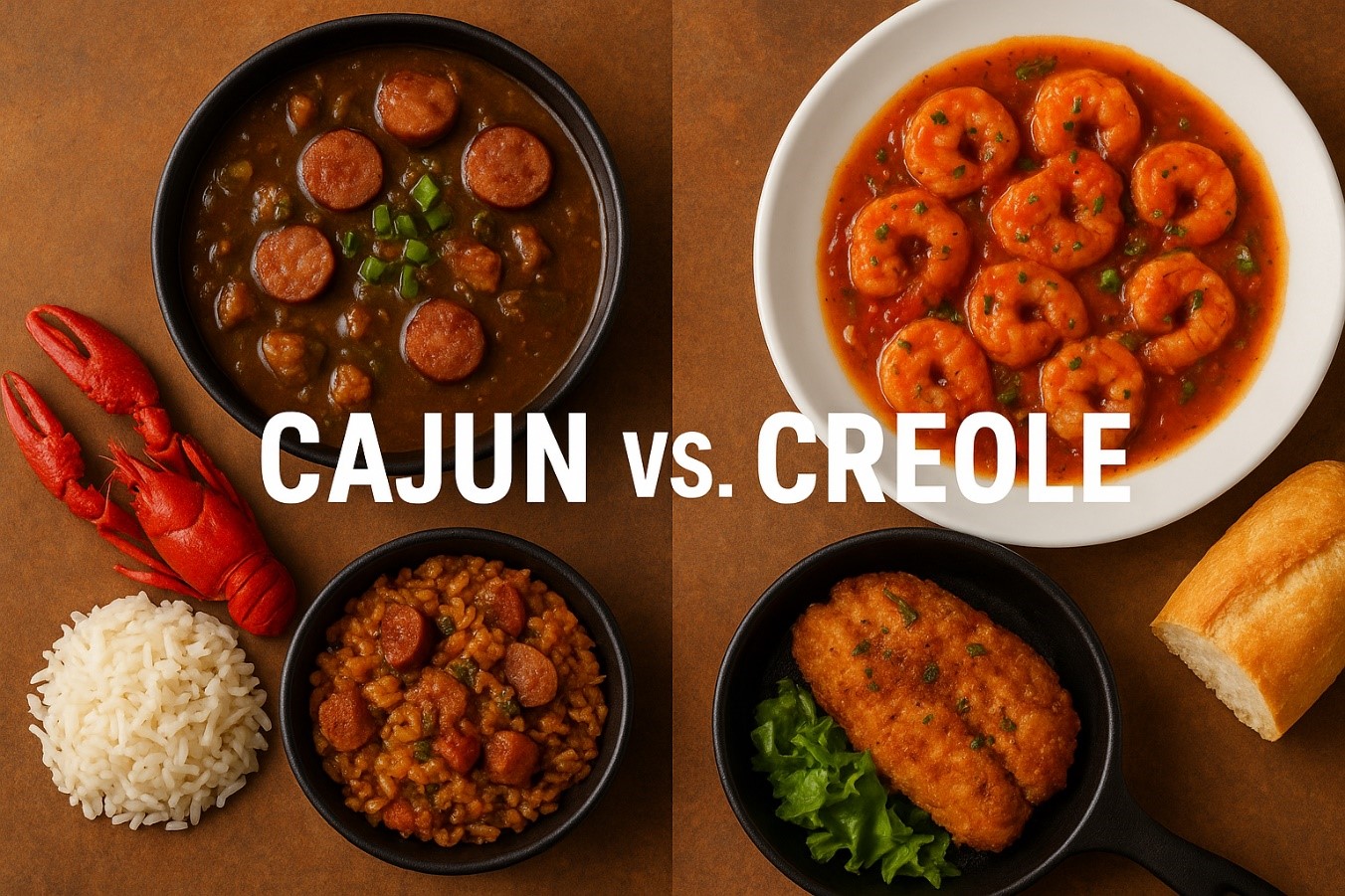
- Cajun Gumbo: Made with a dark roux, okra or file powder, and meats like sausage and chicken. Deep, savory, and full of body.
- Cajun Jambalaya: Known as brown jambalaya. Cooked without tomatoes. The rice soaks up the flavor from the trinity, stock, and seriously browned meats.
- Boudin: A hot cajun link made with pork, rice, and seasonings. Served steamed or grilled.
- Crawfish Étouffée (Cajun Style): Thicker and richer than the Creole version, typically without tomatoes and with stronger spices.
Well-Known Creole Dishes
- Creole Gumbo: Often includes seafood and tomatoes. The roux is usually lighter, and the flavor is more herb driven.
- Creole Jambalaya: The red version of jambalaya. Tomatoes give it color and acidity.
- Shrimp Creole: A bright dish with shrimp simmered in a tomato based sauce with herbs and peppers.
- Bananas Foster: Bananas flamed in rum, butter, and sugar.
Which Cuisine Is Spicier?
Cajun dishes often carry a little more heat thanks to cayenne and black pepper.
Creole dishes use spices too, but herbs tend to lead the flavor.
Which Cuisine Is Healthier?
It depends on the dish:
- Cajun recipes often use oil and smoked meats.
- Creole dishes may use butter or richer sauces.
Both can be light or heavy depending on the cook and the ingredients.
How to Tell If a Dish Is Cajun or Creole
These clues help, though they’re not absolute:
- Tomatoes: With tomatoes, often Creole. Without them, often Cajun.
- Color: Darker dishes lean Cajun. Brighter or red dishes lean Creole.
- Protein: Game meats point to Cajun. More seafood often means Creole.
- Seasoning: Smoky and bold suggests Cajun. Herb-led and balanced suggests Creole.
Can a Dish Be Both?
Yes. Many modern kitchens blend the two. The traditions have long influenced each other, and cooks adapt ingredients to what they have. Still, the original distinctions offer a helpful starting point when learning the differences.
One simple way to think about it:
Cajun cooking grew in the country. Creole cooking grew in the city. Each landscape shaped its food.
What Should You Try First?
If you enjoy rustic comfort food, start with Cajun gumbo or boudin.
If you prefer bright, aromatic sauces, try Creole jambalaya or shrimp Creole.
Or try both and see how each expresses Louisiana’s history in its own way.
Final Thoughts
Cajun and Creole cuisines share a region but grew from different histories and communities. Cajun food reflects rural cooking shaped by Acadian, Native American, and African traditions. Creole food reflects the blended influences of a busy port city. When you know these backgrounds, the flavors make more sense.
Whether you choose a smoky Cajun gumbo or a bright Creole jambalaya, you’re tasting food that carries stories, resilience, and cultural blending.
Ready to Taste the Difference?
If you want to explore Cajun cooking where it’s made every day, a Cajun Food Tour is a great way to start. You’ll meet local cooks, hear the stories behind the dishes, and try recipes that reflect generations of practice.
Book a Cajun food tour and experience these flavors in the place they come from.