King Cake Explained: What It Is, When to Eat It, and Why It Matters in Louisiana
If you visit Louisiana during the winter months, you’ll hear people talking about King Cake everywhere – at offices, bakeries, family gatherings, and festivals. To outsiders, it might look like just another colorful dessert. To locals, King Cake is much more than that.
King Cake is a symbol of Mardi Gras, community, tradition, and Louisiana identity. Understanding it helps you understand the culture itself.
Here’s everything you need to know about what King Cake is, when you’re supposed to eat it, and why it matters so much in Louisiana.
What Is King Cake?
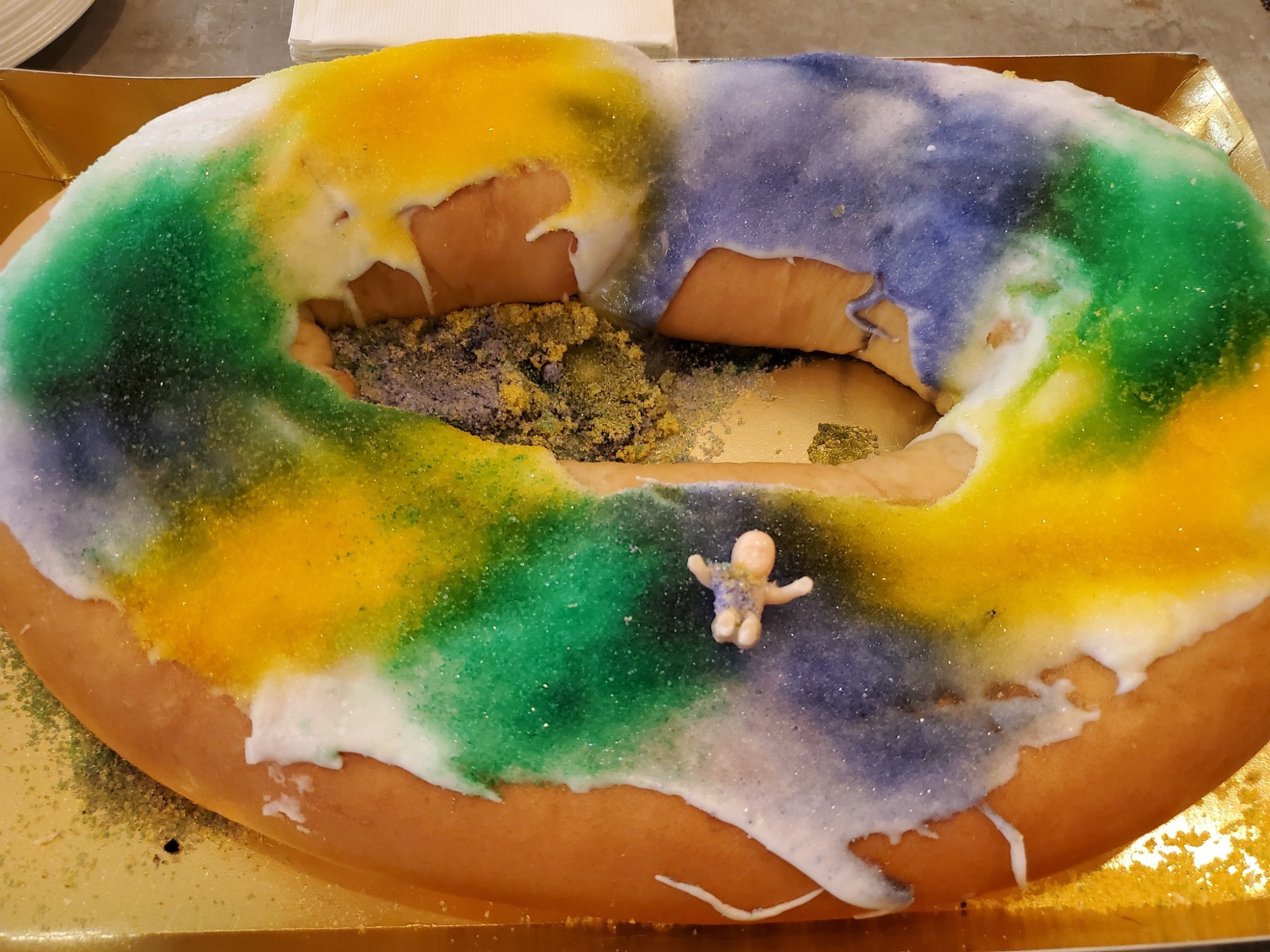
King Cake is a sweet, brioche-style pastry traditionally eaten during the Mardi Gras season in Louisiana. It’s usually oval-shaped and decorated with purple, green, and gold sugar, the official colors of Mardi Gras.
At its most traditional, King Cake is:
- Lightly sweetened
- Flavored with cinnamon
- Unfilled (no cream or icing inside)
- Served in slices like a coffee cake
Hidden inside the cake is a small plastic baby, which represents the baby Jesus and ties the cake back to the Christian celebration of Epiphany.
Over time, bakeries have added fillings like cream cheese, praline, strawberry, or chocolate – but purists will tell you the simplest version is the most authentic.
Why Is There a Baby Inside King Cake?
The baby inside the King Cake is one of its most important traditions.
If you find the baby in your slice:
- You’re responsible for buying the next King Cake
- Or hosting the next gathering or party
In Louisiana workplaces, families, and friend groups, this tradition creates a chain reaction – King Cakes keep showing up until Mardi Gras ends.
More than a gimmick, the baby symbolizes:
- Good luck
- Prosperity
- Community responsibility
It’s one of the many ways food in Louisiana brings people together.
When Is King Cake Season in Louisiana?
King Cake season follows the Catholic liturgical calendar.
Official King Cake season:
- Starts: Epiphany (January 6)
- Ends: Mardi Gras Day (the day before Ash Wednesday)
Outside of this window, authentic King Cake is hard to find in Louisiana, and many locals avoid eating it out of season.
Why the timing matters
King Cake is tied to Carnival, which is a period of celebration before Lent. Eating it year-round would strip it of its meaning. That sense of seasonality is still taken seriously in Cajun Country.
Why King Cake Matters So Much in Louisiana
King Cake matters because it represents everything Louisiana culture stands for: heritage, celebration, and shared experience.
1. It’s Deeply Tied to Mardi Gras
King Cake isn’t just eaten during Mardi Gras – it helps define the entire season. Offices bring them in weekly. Families argue about which bakery is best. Visitors plan trips around them.
It’s not an accessory to Mardi Gras – it’s part of the rhythm of daily life.
2. It Reflects Louisiana’s Cultural Roots
King Cake has roots in:
- French traditions
- Catholic celebrations
- Caribbean influences
Like Cajun and Creole food, it reflects Louisiana’s unique blend of cultures, passed down and adapted over generations.
3. It’s About Community, Not Just Dessert
In Louisiana, food is rarely eaten alone.
King Cake:
- Starts conversations
- Creates obligations (who’s bringing the next one)
- Marks time during the season
It’s shared at work, at school, at church, and at home. That sense of shared ritual is what makes it matter.
Cajun vs Creole King Cake: Is There a Difference?
Yes – though most tourists never notice.
Creole-style King Cakes (often found in New Orleans) tend to be:
- Softer
- Sweeter
- More likely to be filled
Cajun-style King Cakes are often:
- More bread-like
- Less sweet
- Closer to traditional French-style cakes
Both are authentic, but they reflect different regional tastes and histories within Louisiana.
Common King Cake Mistakes Tourists Make
Visitors often misunderstand King Cake culture. Here are a few common mistakes:
- Buying King Cake outside the Mardi Gras season
- Thinking the baby is baked into the cake (it’s usually added after)
- Assuming filled cakes are more traditional
- Treating King Cake like just another dessert
Understanding these nuances helps visitors experience Mardi Gras the way locals do.
Experiencing King Cake the Right Way
The best way to understand King Cake isn’t just reading about it – it’s eating it in context, alongside the foods, stories, and traditions that surround it.
In Louisiana, King Cake is often enjoyed with:
- Conversations about Mardi Gras plans
- Family recipes and opinions
- Other seasonal Cajun and Creole dishes
That full experience is what brings the tradition to life.
Frequently Asked Questions About King Cake
What is King Cake made of?
King Cake is made from a soft, brioche-style dough, usually flavored with cinnamon and sometimes lightly filled. It’s topped with icing or colored sugar in purple, green, and gold. Traditional versions focus more on bread texture than heavy fillings.
Why is there a baby inside King Cake?
The baby represents the Christ Child and ties back to Epiphany, which celebrates the visit of the Three Kings. In Louisiana tradition, whoever finds the baby is responsible for bringing the next King Cake or hosting the next gathering.
When does King Cake season start and end in Louisiana?
King Cake season starts on January 6 (Epiphany) and ends on Mardi Gras Day, the day before Ash Wednesday. Eating King Cake outside this period is generally avoided by locals.
Is King Cake a Cajun or Creole tradition?
King Cake is both. The tradition began in Creole New Orleans, but it’s widely embraced across Cajun Country. Cajun King Cakes tend to be simpler, less sweet, and more bread-focused than many New Orleans versions.
Where can visitors find authentic King Cake in Louisiana?
Authentic King Cake is most often found at local bakeries, grocery store bakeries, and community fundraisers during Carnival season. In places like Lafayette, asking locals where they buy theirs usually leads to the best results.
Final Takeaway
King Cake is more than a colorful pastry. In Louisiana, it’s a seasonal tradition tied to faith, family, and community. Knowing what it is, when to eat it, and why it matters helps visitors experience Carnival the way locals do. Whether you encounter it at a bakery, a workplace gathering, or while learning about Cajun food on a guided tour, King Cake offers a simple but meaningful window into life in Cajun Country.