Cajun Cracklin’ vs. Cajun Pork Skins: What’s the Difference?
If you are spending time in Lafayette, Louisiana, you will quickly learn that Cajun food is about more than gumbo, boudin, and crawfish. Some of the most familiar snacks in South Louisiana come from pork, including Cajun Cracklin and Cajun Pork Skins.
At first glance, they can look similar. Both are crispy, rich, savory, gluten-free, and closely connected to Louisiana food culture. But they are not quite the same. The cut of pork, the amount of meat and fat, and the cooking process will all affect the final texture and flavor.
If you are visiting Lafayette or traveling through Acadiana, trying both is a simple way to get a better feel for the region’s food traditions.
What Is Cajun Cracklin’?
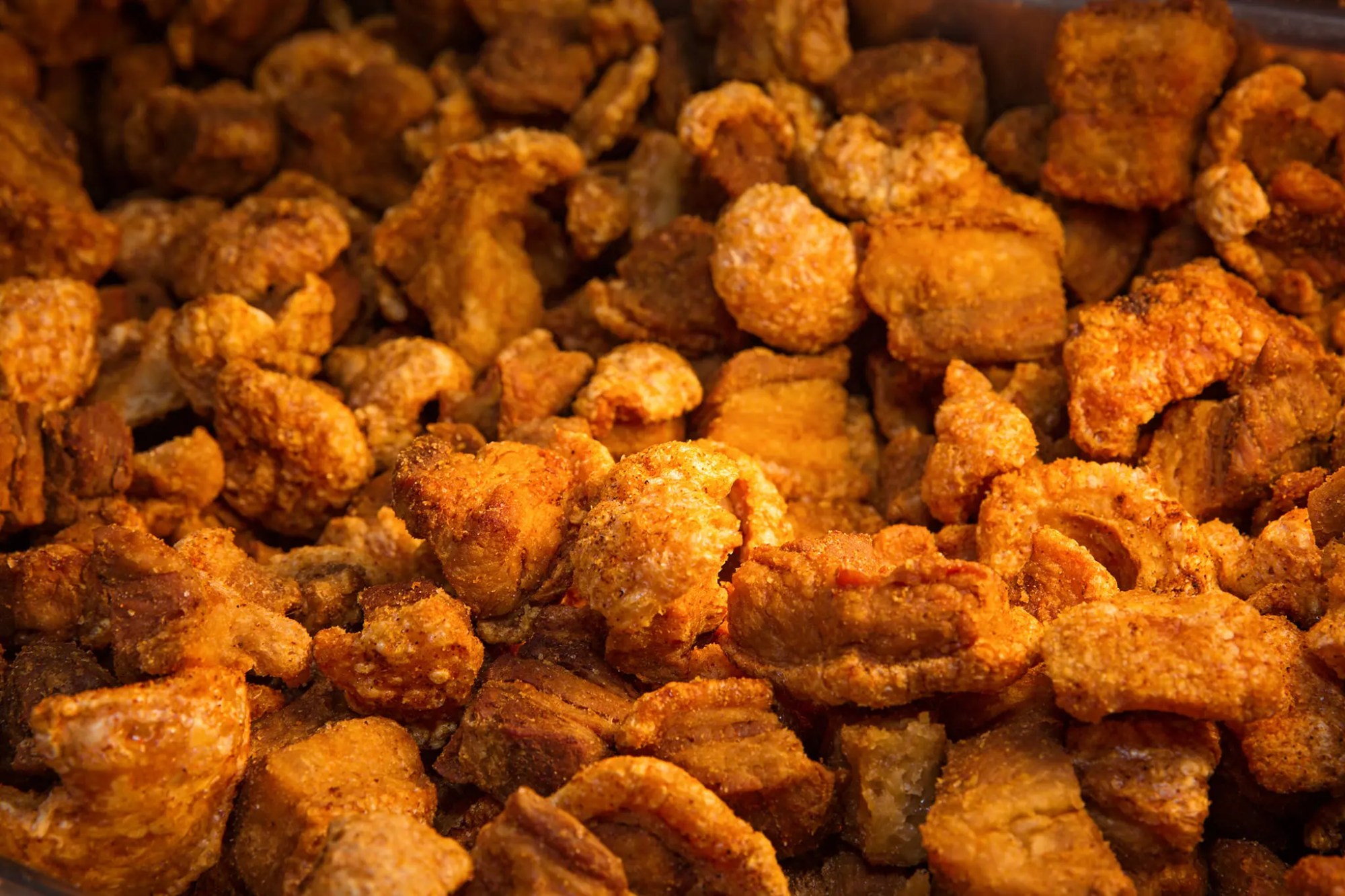
Cajun Cracklin, simply called cracklin, (sometimes called gratons among local French speakers) is a traditional Louisiana pork snack made by cooking pieces of pork belly with all of its layers: meat…fat…. meat…fat….and finally, the layer of skin left on top! A cube of bacon with the pork skin remaining.
The cubed pieces are cooked in two stages. In the first stage, they are being fried in their own fat renderings until the meat layers become very tender, and about half of the fat renders out. The 2nd stage is called “popping the skins,” where they are briefly fried at a higher temp until the skin bubbles up, blisters & becomes crisp. The result is a snack with a combination of crunchy skin, rich rendered fat, and a meaty bite.
That combination is one of the things that makes cajun pork cracklins different from many other crispy pork snacks. Good cracklin can have several textures in one piece rather than being completely light and airy.
Seasoning also plays an important role. Depending on the preparation, cracklins may be seasoned with salt and/or Cajun-style spices. Some are relatively simple, allowing the pork flavor to stand out, while others have a stronger savory or spicy character.
For visitors, the texture is often the easiest way to recognize a traditional cracklin. Pick up a piece and you will definitely notice that it feels heavier and denser than a typical pork rind.
What Are Cajun Pork Skins?
Cajun Pork Skins are made from only skin of the pork that has been fried, typically in lard until it becomes puffed up and crisp. They are closely related to what many Americans know as pork rinds.
The key difference is that pork skins are generally focused on the skin itself rather than the combination of skin, fat, and meat found in cracklin preparations.
When properly prepared, pork skin can become very crunchy and airy. The texture can range from light and crisp to thicker and harder, depending on how the skin is prepared and cooked.
Seasoning can vary, too. A Cajun-style version may have a savory, salty flavor with spices that give the snack a Louisiana character.
For someone looking for best Cajun Pork Skins, texture is worth paying attention to. Freshness and preparation can make a noticeable difference in whether the skin is crisp and pleasant or overly hard and chewy.
Where to get them and how to order:
You’ll want to visit one of the many locally owned “specialty meat markets” in the Acadiana area. (Ask any local, and they’ll be DELIGHTED to tell you which market makes their favorite.) Proceed to the meat counter or to the deli, and ask for “an $8 bag of cracklin’,’” (or any dollar amount you want, but $8 is a perfect sampling/ snack size for one or two people.) They’ll put them in a brown paper bag and you’ll want to try them while they’re hot.
Cajun Cracklin’ vs. Cajun Pork Skins: The Main Difference
The simplest way to understand the difference is to look at what each snack emphasizes.
| Feature | Cajun Cracklin’ | Cajun Pork Skins |
| Main ingredient | Pork skin with fat and often meat | Primarily pork skin |
| Texture | Crispy, dense, rich, sometimes meaty | Light to crunchy, depending on preparation |
| Fat content | Usually more noticeable | Generally less rich than cracklin |
| Meat | May contain pieces of meat | Usually little to no meat |
| Flavor | Rich pork flavor with seasoning | Crisp pork flavor with seasoning |
| Eating experience | Heavier and more substantial | Crunchier and lighter |
There can be variation from one preparation to another, so these descriptions are useful guidelines rather than strict rules. In Louisiana, local preparation matters.
That is part of the fun of trying them in South Louisiana. Two versions of what appears to be the same simple snack can have noticeably different textures and flavors.
Why Cajun Cracklin’ Is So Popular in Louisiana
Food in South Louisiana often reflects a practical approach to cooking. Traditionally, cooks found ways to make good use of available ingredients, and pork has long played an important role in regional cooking.
Cracklin’ fits naturally into that food culture. The process turns pork skin, fat, and meat into a flavorful snack instead of wasting useful parts of the animal.
Today, cracklin’ remains a familiar part of Louisiana’s food landscape. You may see it served as a snack, offered alongside other Cajun specialties, or encountered while visiting local food markets and stops around Acadiana.
For visitors, it is also a reminder that Cajun cuisine is not limited to the dishes that appear on a typical tourist menu.
What Makes the Best Cajun Cracklin’?
Searching for the best Cajun Cracklin’ can lead to plenty of opinions because people have different preferences.
Some people want cracklin that is extremely crispy. Others prefer pieces with more meat and fat. Some enjoy a stronger seasoning, while others want the natural pork flavor to take center stage.
A few things are worth considering when tasting cracklin:
- Texture: Look for a satisfying combination of crispness and tenderness.
- Freshness: Cracklin is best enjoyed when it has been properly stored and retains its intended texture.
- Seasoning: Salt and spices should complement the pork rather than completely cover its flavor.
- Balance: A good piece can offer crunch, richness, and savory pork flavor in one bite.
- Preparation: Different cooking methods and cuts can produce different results.
There is no single definition of the perfect piece. Your favorite may depend entirely on whether you prefer something crunchy, meaty, rich, or highly seasoned.
What Makes Good Cajun Pork Skins?
The same idea applies when comparing Cajun Pork Skins.
Because the focus is on pork skin, texture becomes especially important. A good pork skin should have a satisfying crunch and a seasoning level that works with the pork rather than overpowering it.
When comparing different versions, pay attention to:
- How crisp the skin is
- Whether the texture is airy or dense
- The amount of seasoning
- The salt level
- The overall freshness
- How long the crunch lasts as you eat it
If you enjoy traditional pork rinds, Cajun Pork Skins can be an easy introduction to another side of Louisiana’s snack culture.
How to Eat Cracklin and Pork Skins in Lafayette
One of the best ways to understand Louisiana food is to taste it rather than simply read about it.
When you are in Lafayette, pay attention to the small food traditions that locals enjoy. Cracklin’ and pork skins may not have the same international recognition as crawfish or gumbo, but they are useful examples of the region’s love of bold, satisfying food.
You can also compare the two side by side. Start with the pork skin and focus on its crunch. Then try the cracklin’ and notice the difference in richness, density, and texture.
That simple comparison can tell you more about the ingredients and preparation than a menu description alone.
Final Thoughts: Cajun Cracklin’ vs. Cajun Pork Skins
So, what is the difference between Cajun Cracklin and Cajun Pork Skins?
The biggest difference comes down to the cut and the texture. Cajun cracklin commonly combines crispy pork skin with rendered fat and sometimes meat, creating a richer and denser snack. Cajun Pork Skins focus mainly on the pork skin, giving them a characteristically crunchy texture.
Neither one is necessarily “better.” The best Cajun Cracklin or best Cajun Pork Skins comes down to personal taste.
If you are visiting Lafayette, Louisiana, try both if you get the chance. A simple comparison can introduce you to an authentic and often overlooked part of Cajun food culture—and give you one more reason to keep tasting your way through Acadiana.
Frequently Asked Questions
Are Cajun Cracklin and Cajun Pork Skins the same thing?
No. Although both are crispy pork snacks, traditional cracklin generally includes pork skin along with fat and sometimes meat. Cajun Pork Skins are primarily made from pork skin.
What is Cajun Cracklin made from?
Cajun cracklin is commonly made from pieces of pork skin with layers of fat and, depending on the preparation, meat. The pieces are cooked until the skin becomes crisp and the fat renders.
Are Cajun Pork Skins the same as pork rinds?
They are closely related. Both are primarily made from pork skin, although preparation, texture, and seasoning can vary.
What is the difference between cajun pork cracklins and pork skins?
The main difference is the amount of skin, fat, and meat involved. Cajun pork cracklins are often denser and richer because they can contain rendered fat and pieces of meat. Pork skins primarily emphasize crisped pork skin.
What are cajun chicken cracklings?
Cajun chicken cracklings are a chicken-based crispy snack. They are different from traditional pork cracklin because they use chicken rather than pork.