
In Cajun cooking, some ingredients are added for more than their presence in a dish. A small amount can bring smoky depth, peppery heat, and savory richness to an entire pot of food. Cajun tasso is one such ingredient. This Louisiana specialty is often used to build flavor in dishes such as beans, gravies, and rice-based meals. It may resemble ham at first glance, but its preparation, seasoning, and role in the kitchen set it apart. This guide explores the history of Louisiana tasso, how pork tasso is prepared, how it is used in Cajun cooking, and how it compares with andouille, bacon, and other smoked meats.
What Is Cajun Tasso?
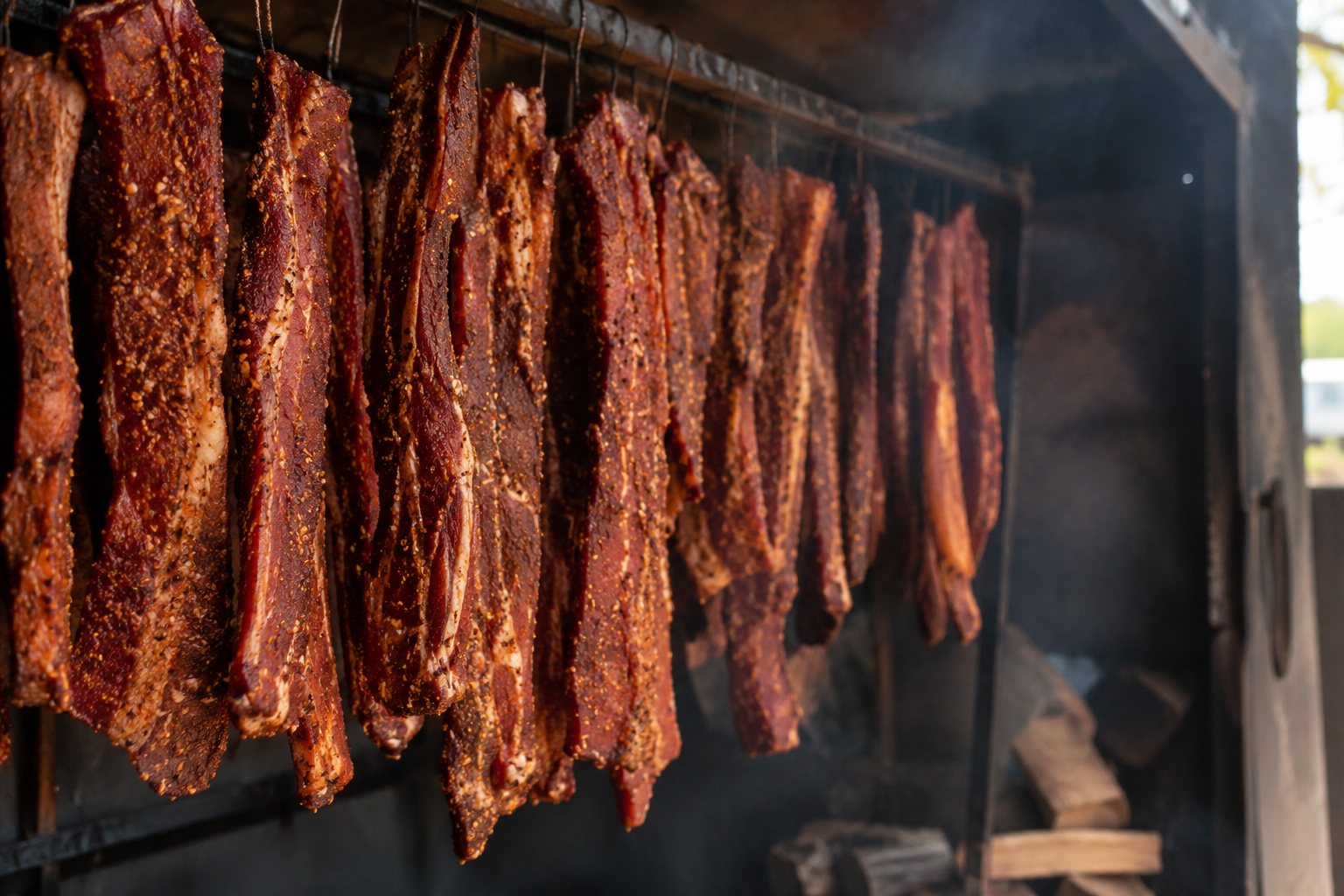
Cajun tasso is a seasoned, cured, and smoked meat associated with Louisiana’s Cajun cuisine. It is typically made from pork shoulder and is often called tasso ham, although it is not traditional ham made from the hind leg. Its firm texture and concentrated, smoky, salty, and peppery flavor distinguish it from milder smoked meats.
Cooks commonly dice pork tasso and add it to dishes such as gumbo, beans, gravies, and rice-based meals. Used in small amounts, it seasons the dish as it cooks, making it a flavoring ingredient as well as a meat. The spice blend and heat level vary by recipe and producer.
How Is Pork Tasso Prepared?
Preparing pork tasso involves several steps that combine curing, seasoning, and smoking. While recipes and commercial methods vary, the process generally includes:
- Selecting and cutting the pork: Pork shoulder is the traditional choice. It is cut into strips or slabs to prepare it for curing and seasoning.
- Curing the meat: The pork is treated with a salt-based cure. Some recipes also use sugar or other curing ingredients. The curing method and duration depend on the recipe and the size of the cuts.
- Applying the seasonings: The meat is coated with a spice blend that commonly includes garlic, cayenne pepper, and black pepper. Specific ingredients and quantities vary by producer.
- Smoking the pork: The seasoned meat is smoked to develop its characteristic flavor. Smoking conditions and the required internal temperature depend on the processing method.
- Cooling and storing: After processing, the meat must be handled, cooled, and stored according to appropriate food-safety guidance.
Since curing and smoking methods differ, recipes should be followed carefully, especially when preparing tasso at home.
How Tasso Is Used in Cajun Cooking
Cooks often brown diced pork tasso early in the cooking process, allowing its seasonings and rendered fat to contribute to the base. It is used in several ways:
- Gumbo: Tasso adds smoky pork flavor to the broth and complements ingredients such as chicken, sausage, or seafood, depending on the recipe.
- Jambalaya: When browned with the other meats and aromatics, tasso seasons the rice as the dish cooks.
- Beans and vegetables: A small amount of smoked pork tasso can add savory depth to red beans, greens, and other slow-cooked vegetables.
- Sauces and gravies: Finely diced tasso can be cooked into cream sauces, gravies, and pan sauces to give them a smoky, peppery base.
- Seafood dishes: Some Louisiana recipes combine tasso with shrimp or crawfish, pairing the pork’s smoky flavor with the seafood’s sweetness.
Since tasso is typically well-seasoned and can be salty, add salt and other seasonings gradually, tasting as the dish cooks. Unlike meat served mainly as the central protein, Cajun tasso is often used in modest quantities to distribute its flavor throughout a dish.
Tasso vs. Andouille: What Is the Difference?
Both Cajun tasso meat and andouille are smoked pork products used in Louisiana cooking, but they differ in form, preparation, and texture.
| Feature | Tasso | Louisiana Andouille |
| Form | Cured and smoked pieces of pork | Smoked pork sausage in a casing |
| Typical meat | Pork shoulder | Pork, often coarsely chopped or ground |
| Preparation | Cured or salted, seasoned, and smoked | Seasoned, stuffed into casings, and smoked |
| Texture | Firm pieces of meat | Coarse, dense sausage texture |
| Culinary role | Often diced to season a dish | Often sliced or chopped as an ingredient in the dish |
Louisiana tasso and andouille can be used together when a recipe calls for both, as each contributes a different texture and flavor profile.
Tasso vs. Bacon, Ham, and Other Smoked Meats
Although Louisiana tasso shares characteristics with other cured or smoked meats, differences in the cut, preparation, and texture affect how each is used in cooking.
| Meat | Typical Characteristics | Common Culinary Use |
| Tasso | Usually made from seasoned, cured, and smoked pork shoulder; firm texture and bold seasoning | Diced in small amounts to flavor beans, gumbo, gravies, and rice dishes |
| Bacon | Often made from pork belly, with a relatively high fat content | Cooked to render fat, crisped into strips, or added to dishes for smoky, savory flavor |
| Ham | Typically made from the hind leg; may be cured, smoked, or both | Served in slices or larger portions, or added to soups and other recipes |
| Smoked sausage | Seasoned ground or chopped meat stuffed into a casing and smoked | Sliced or chopped into dishes such as gumbo and jambalaya |
| Smoked pork or ham hocks | Often bone-in cuts that contain skin, connective tissue, and meat | Simmered in beans, soups, and stews to contribute smoky flavor and richness |
Where to Experience Cajun Food in Louisiana
Learning about Louisiana tasso offers a glimpse into the ingredients that shape Cajun cuisine, but tasting regional dishes adds another dimension to the experience. If you’re visiting Lafayette, Louisiana, a guided food tour can introduce you to local restaurants, regional specialties, and the food traditions of Acadiana. Cajun Food Tours connects visitors with local eateries through guided culinary experiences, offering opportunities to explore the flavors and food culture of Cajun Country. Explore our Lafayette restaurant tour to discover local dining spots and experience Cajun cuisine beyond the familiar dishes. Book your Cajun Food Tour today to taste authentic local flavors and learn more about the culinary traditions of South Louisiana.
Frequently Asked Questions
- What does Cajun tasso taste like?
Cajun tasso has a smoky, savory flavor with pronounced seasoning. Garlic, black pepper, and cayenne are common ingredients, although the spice level varies by recipe and producer.
- Is tasso ham the same as regular ham?
No. Despite sometimes being called tasso ham, tasso is generally made from pork shoulder, while traditional ham comes from the hind leg. Tasso is also typically more heavily seasoned and used to flavor other dishes.
- Is pork tasso fully cooked?
Not necessarily. Whether pork tasso is ready to eat depends on how it was processed and labeled. Check the package instructions, and cook it as directed if it is not labeled ready to eat.
- Can you eat tasso on its own?
Some ready-to-eat tasso products can be eaten on their own if the packaging confirms this. However, tasso is commonly diced or sliced and added to cooked dishes to contribute smoky, savory flavor.
- What can you substitute for tasso in Cajun recipes?
Smoked ham, bacon, or smoked sausage can work as substitutes, depending on the recipe. Each has a different fat content, texture, and seasoning profile, so adjust added salt and spices after tasting.
- Is tasso the same as andouille sausage?
No. Tasso is a seasoned, cured, and smoked piece of meat, usually pork shoulder. Andouille is a smoked pork sausage made from meat stuffed into a casing. Both are used in Cajun cooking but provide different textures.
- What dishes commonly use Louisiana tasso?
Louisiana tasso is commonly used to season gumbo, jambalaya, red beans, gravies, and other slow-cooked dishes. It is often browned early in cooking so its smoky flavor and seasonings can spread through the dish.